
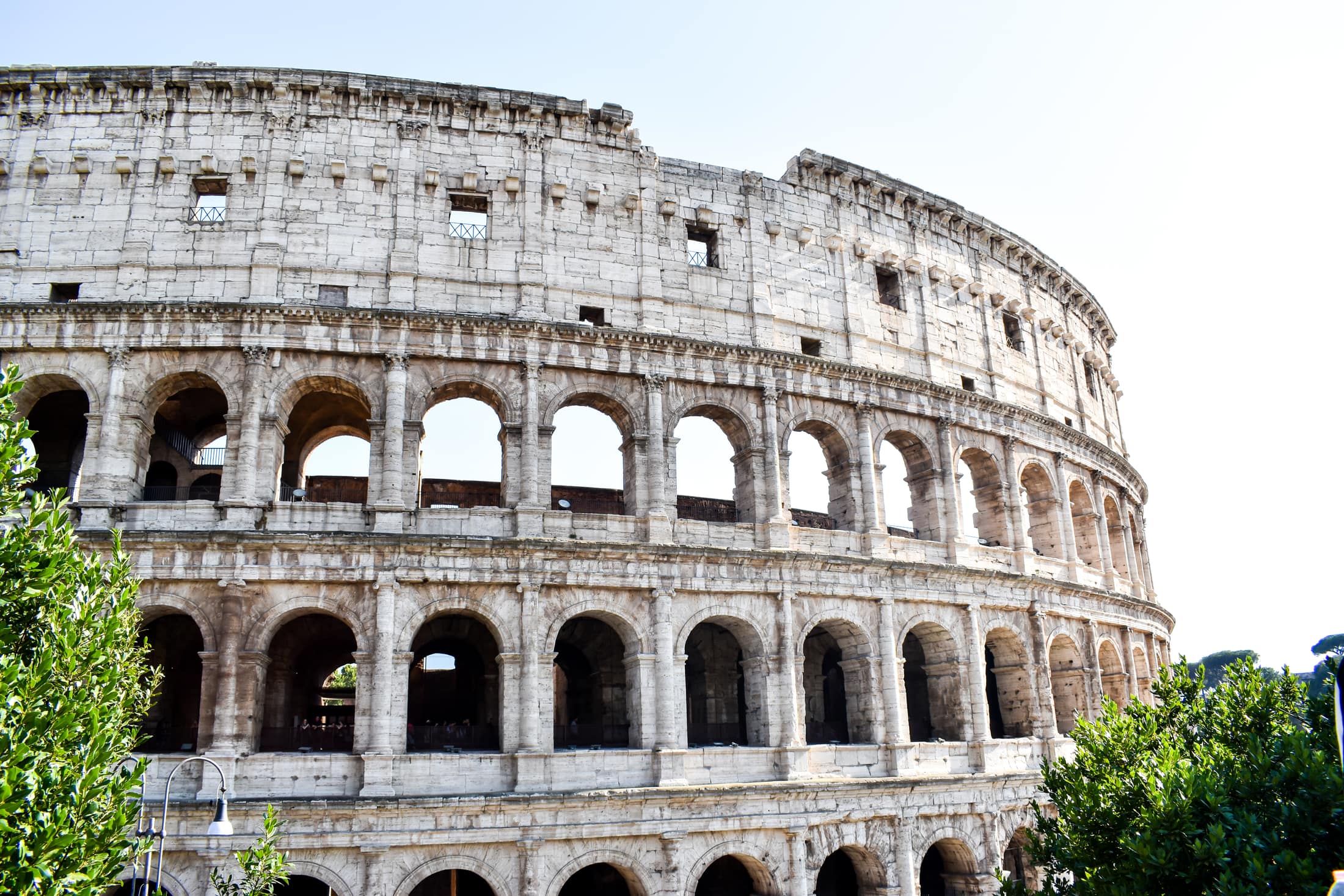
Rome and Lazio
Private transfers in Rome
Rome is served by two airports at very different distances, a cruise port in another town, and four railway stations. Most of what makes a transfer easy or awkward is decided before anyone gets into a car — by which of those you are actually arriving at, and by the street at the other end.
Where the journey begins
Start with where you actually arrive
Four kinds of arrival point serve Rome, and the differences between them are larger than a map suggests.
- AirportFiumicino (FCO)Leonardo da Vinci — about 32 km south-west of RomeThe hub of the Rome system and much the larger of the two: about 51.3 million passengers in 2025, scheduled national, international and intercontinental flights, and two passenger terminals whose allocation depends on your airline.
- AirportCiampino (CIA)Giovan Battista Pastine — about 15 km south-east of RomeCloser to the city and far smaller — about 4 million passengers in 2025 — used mainly by low-cost airlines, express couriers and general aviation. If a ticket says only Rome, it is worth checking which of the two it means.
- Cruise portCivitavecchiaRoughly 70 km north-west of RomeA separate town with its own railway station, not a Rome quayside. Ships berth at numbered docks inside a working port, which is why a meeting point is something to agree rather than assume.
- RailwayRome's railway stationsTermini has 32 tracks; Tiburtina has 17A high-speed train sets you down in the middle of the city with your luggage. Where a car can wait depends on which station it is and on the streets immediately around it.
Passenger figures are the airport operator's own, for 2025. Track counts are the railway infrastructure manager's.
Access
What decides where a car can stop
Much of central Rome is a limited-traffic zone. It is the single thing most likely to change where a door-to-door journey really ends.
A zona a traffico limitato — ZTL — is an area that unauthorised vehicles may not enter during published hours. Cameras at the entrances read number plates. It is not a parking restriction: it governs whether a vehicle may be on the street at all.
The city's mobility agency lists five zones in the centre: Centro Storico, which has both a daytime and a night-time zone; Tridente; Trastevere, likewise day and night; San Lorenzo; and Testaccio. Among the categories permitted to enter, the agency names taxis and cars for hire with driver — noleggio con conducente, the category a private transfer belongs to.
Permission to enter a zone is not the same as a street a car can use. Lanes in the centre are narrow, many are pedestrian, some close for works, markets or events, and no permit widens a road. For an address inside the centre the practical answer is often an agreed point a short walk away — which is a detail worth settling when the journey is arranged, not on the morning itself.
- Centro Storico, daytime
- 06:30–18:00 Monday to Friday, and 14:00–18:00 on Saturday, public holidays excepted.
- Centro Storico, night
- 23:00–03:00 on Friday and Saturday. The night zone is not active in August.
- Trastevere, daytime
- 06:30–10:00 Monday to Saturday, public holidays excepted.
- Who may enter
- Permit holders, holders of a disabled person's badge, and the categories set out in law — which include taxis and cars for hire with driver.
Hours as published by Roma Servizi per la Mobilità and checked in October 2026. They are set by city ordinance and change, including seasonally, so check the rules for your own date: the agency publishes the current timetable
Districts
Where you are staying changes the journey
Not because one part of Rome is better served than another, but because the streets are genuinely different.
- Centro Storico
- The historic centre, inside the limited-traffic zone, on narrow and frequently pedestrian streets. Expect to be met at an agreed point nearby rather than at the door itself.
- Termini and Esquilino
- Around the main station. Broad approach roads and dense traffic; the constraint here is usually congestion and the station's own layout rather than access.
- Prati and the Vatican
- Across the Tiber, laid out on a grid of wide nineteenth-century streets. Generally the easiest central area for a vehicle to reach an address.
- Trastevere
- Has its own limited-traffic zone, day and night, on a web of lanes that were never built for cars. A nearby corner is usually the realistic place to meet.
- Monti
- Between the Colosseum and Termini, on a hillside of narrow sloping streets, inside the centre's zone.
- EUR
- A planned twentieth-century district south of the centre, with wide roads and generous frontages. Rome's exhibition and conference buildings are here.
Journeys
The journeys people ask about most
Each of these has its own page, because each has its own practical problem.
- Fiumicino Airport to RomeA terminal at one end, a city address at the other.
- Ciampino Airport to RomeShorter, smaller, and often very early or very late.
- Rome to Civitavecchia cruise portA sailing-day journey, counted back from all-aboard time.
- Fiumicino Airport to CivitavecchiaFly in and sail: same day, or the day before.
- Rome's railway stationsTermini, Tiburtina, Ostiense and San Pietro.
Beyond the city
Lazio holds a good deal within an easy drive of Rome. Tivoli alone has two UNESCO World Heritage sites — Villa Adriana, inscribed in 1999, and Villa d'Este, inscribed in 2001 — and the Castelli Romani and Ostia Antica are also close.
A day of that kind is a different request from an airport run: it has stops, waiting and a shape that depends on what you want to see. There is no page here that sets one out, because one itinerary does not fit two travellers. Say where you would like to go and how long you have, and the answer will be about that.
The inscription dates above are from the World Heritage List; UNESCO publishes both entries
Questions
Questions worth answering before you ask
Short answers, and none of them a sales pitch.
Which airport serves Rome?
Two do. Fiumicino, officially Leonardo da Vinci, is about 32 km south-west of the city and carries the great majority of the traffic — about 51.3 million passengers in 2025. Ciampino, officially Giovan Battista Pastine, is about 15 km south-east and handled about 4 million, mostly low-cost flights, express couriers and general aviation. Both are managed by Aeroporti di Roma.
Is Civitavecchia in Rome?
No. It is a separate town roughly 70 km north-west of Rome with its own railway station, and its cruise port is a working port where ships berth at numbered docks. Treat the journey between the two as a real one, and confirm where inside the port you are to be met.
Can a car collect me from my hotel door in the centre?
Sometimes. Taxis and cars for hire with driver are among the categories permitted to enter Rome's limited-traffic zones, but being permitted to enter a zone is not the same as there being a street a vehicle can use. In the historic centre a meeting point a short walk from the door, agreed in advance, is often the workable answer.
What changes the price of a transfer?
The exact addresses at both ends, the date and the time, how many of you there are and how much luggage you have, the vehicle that suits that, and anything added to the journey. None of it can be answered from a page, which is what a quotation is for.
Which Rome station will my train use?
Your ticket names it. Termini is the largest, with 32 tracks; Tiburtina, with 17, takes many high-speed services; Ostiense and San Pietro serve other lines. The station decides where a car can reasonably wait, so it is worth checking before you ask.
How far ahead should I ask?
As soon as the flight, train or sailing is fixed. A request has to be read and answered before anything is arranged, and the details you can give early — the flight number, the full address, the number of bags — are what make the answer useful rather than approximate.
Tell us the journey
Where you are landing, docking or arriving; where you are going; when; and how many of you there are with how much luggage. That is enough to answer properly.
A request is not a booking. Nothing is arranged until you have a reply setting out the vehicle, the price and the meeting arrangement, and you have agreed to it.