
Milan and Lombardy
Private transfers in Milan
Milan is the one Italian city where the airport printed on your ticket may be fifty kilometres away, in a different province, run by a different company. Everything else follows from which of the three you are actually flying into.
Which airport is on your ticket?
- MXPMalpensaNorth-west of the city, in the province of Varese. Two terminals, and the country's largest intercontinental gateway.
- LINLinateThe city airport: closest in, smallest of the three, mostly short- and medium-haul.
- BGYBergamoNot in Milan. It stands at Orio al Serio, about 50 km away, in the province of Bergamo.
All three are sold as Milan. Only one of them is in it.
Access
Two zones, one inside the other
Milan does not have a single restricted zone. It has a low-emission zone covering most of the city, and a charged zone inside that one.
Almost every explanation of this treats Area B and Area C as two items in a list, which is the one thing they are not. Area C sits inside Area B, so a journey into the historic centre crosses both — and the rules that apply are the rules of whichever zone you are in at the time.
Area B is the outer one, a low-emission zone covering most of the municipality and entered through a few hundred camera-controlled gates. It restricts the most polluting vehicles, goods vehicles over twelve metres, vehicles carrying dangerous goods, and vehicles without blind-spot warning systems.
The city names taxis, and private-hire cars of up to nine seats, among the categories exempt from the Area C charge — provided the vehicle's plate is registered for limited-traffic zones and reserved lanes. That is a rule about categories of vehicle. It is not a statement about any particular journey, and no exemption makes a narrow street wider or a closed one open.
Zone rules and hours as published by the Comune di Milano and checked in October 2026. They are set by city ordinance and change; the charge itself has changed more than once, which is why no amount appears on this page. the city publishes the current rules
The outer zone
Area B
A low-emission zone over most of the city, entered through camera-controlled gates. It restricts the most polluting vehicles, goods vehicles over 12 m, vehicles carrying dangerous goods, and vehicles without blind-spot warning systems.
Monday to Friday, 07:30–19:30. Not active on Saturdays or public holidays.
And inside it
Area C
A charged zone covering the Cerchia dei Bastioni, the ring of boulevards around the historic centre. Vehicles that are not exempt pay a daily charge to enter during its hours.
Monday to Friday, 07:30–19:30, public holidays excluded, all year.
Districts
Where you are staying changes the journey
Milan's centre is small and old, and almost everything around it is not. The difference shows up in the last two hundred metres.
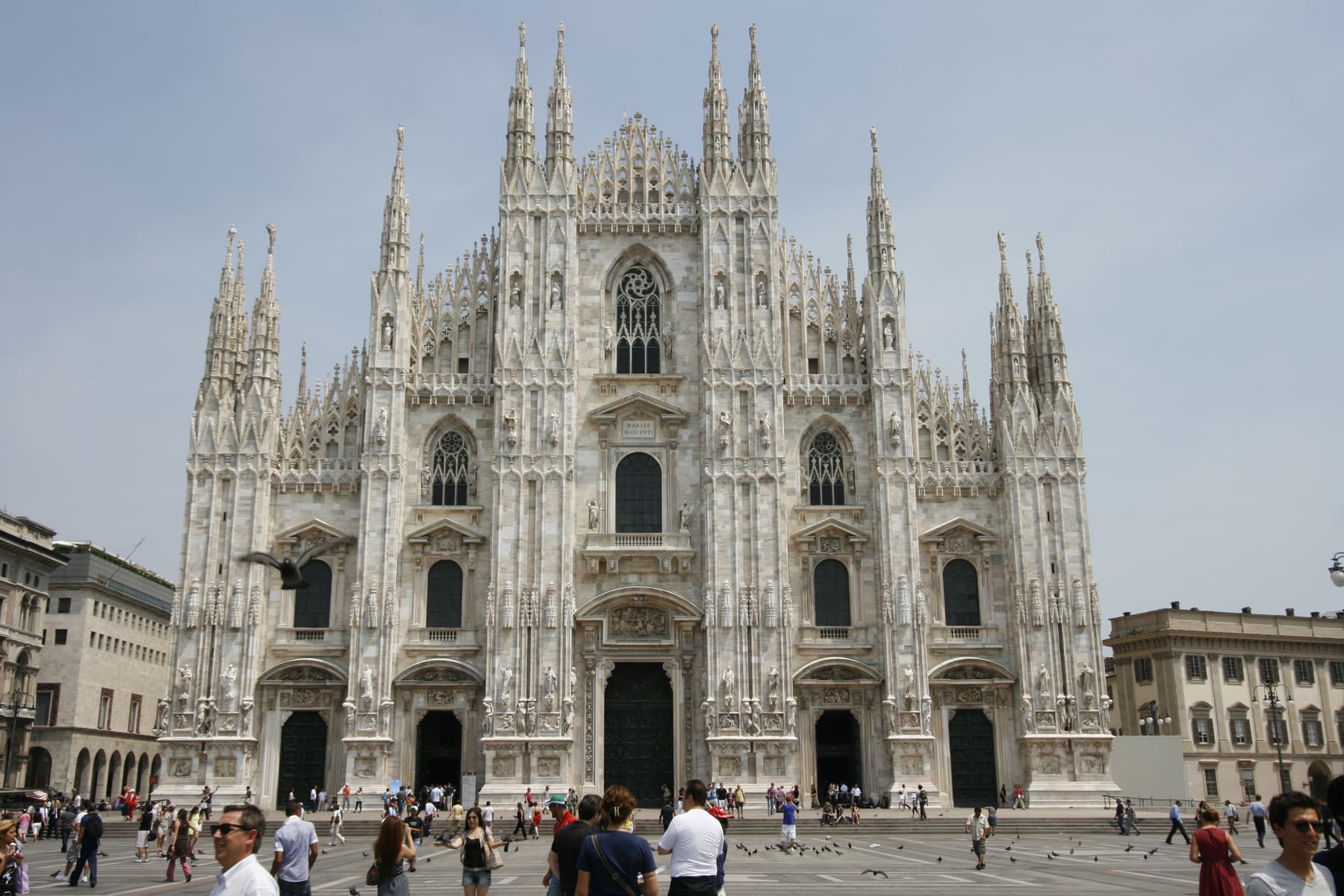
- Duomo and the Centro Storico
- Inside Area C as well as Area B, on streets that were medieval before they were anything else. For an address in here, expect to be met at an agreed point a short walk away rather than at the door.
- Brera
- North of the Duomo and inside both zones, on narrow streets that fill with people in the evening. The same practical answer applies.
- Porta Nuova
- Towers and wide roads immediately north of the centre, inside Area B but outside Area C. Generally the easiest central district for a vehicle to reach an actual address.
- Navigli
- The canal district to the south-west, inside Area B. The quaysides are narrow and busy at night, which matters more than the zone rules do.
- CityLife and Portello
- West of the centre and built in this century, with generous frontages and underground parking. Straightforward by comparison.
- Fiera and Rho
- The main exhibition grounds are not in the city at all — they are out to the north-west, on the way to Malpensa. Say which site you mean when you ask, because the two are not in the same place.
- Centrale
- Around the main station: broad approach roads, dense traffic and the station's own layout to allow for. The constraint here is congestion rather than access.
Onward
From Milan
The journeys that have pages of their own.
- Lake ComoNot one destination — three arms of water and a town to name.
- Milan's railway stationsCentrale, Garibaldi, Cadorna and Rogoredo, and why Cadorna is different.
- Malpensa Airport to MilanThe most asked-about Milan transfer.
- Linate Airport to MilanShort, and not automatically quick.
- Bergamo Airport to MilanThe fifty kilometres the airport's name conceals.
- Malpensa Airport to Lake ComoStraight to the lake rather than into the city.
Questions
Milan questions worth answering first
Short answers, and two of them are corrections.
How many airports does Milan have?
Three are sold under its name. Malpensa and Linate are operated by SEA; Bergamo, officially Il Caravaggio International Airport, is operated by SACBO and stands at Orio al Serio in the province of Bergamo, about 50 km from Milan. Check which one your ticket means before you arrange anything.
Is Bergamo Airport in Milan?
No. It is about 5 km from Bergamo and about 50 km from Milan, in a different province. It is a real airport with a real transfer to Milan attached to it — but it is not a Milan airport in the sense the name suggests.
What is the difference between Area B and Area C?
Area B is a low-emission zone covering most of the city; Area C is a charged zone inside it, covering the Cerchia dei Bastioni around the historic centre. Both operate Monday to Friday, 07:30 to 19:30. A journey into the old centre crosses both.
Can a car collect me from my hotel door in the centre?
Sometimes. Taxis and private-hire cars of up to nine seats are among the categories the city exempts from the Area C charge when their plates are registered for limited-traffic zones — but an exemption is not a wider street. Inside the Centro Storico and Brera, a meeting point a short walk away, agreed in advance, is often the workable answer.
Which station will my train use?
Your ticket names it. Centrale has 24 tracks and Porta Garibaldi has 20; Rogoredo has 13; Cadorna is run by a different infrastructure manager altogether and is where the Malpensa Express terminates. The station decides where a car can reasonably wait.
What changes the price of a transfer?
The exact addresses at both ends, the date and time, how many of you there are and how much luggage, the vehicle that suits that, and anything added to the journey. None of it can be answered from a page, which is what a quotation is for.
Tell us which airport, and where you are going
The airport and flight, the full address at the other end, the date and time, and how many of you there are with how much luggage. In Milan the first of those decides most of the rest.
A request is not a booking. Nothing is arranged until you have a reply setting out the vehicle, the price and the meeting arrangement, and you have agreed to it.